
parkbeat
Helping park agencies and planners turn evidence about visitors, nearby communities, and park benefits into better decisions.
Park data, surveys, and analysis
Parkbeat brings park and community data, survey findings, and Radbridge’s economic analyses into one dashboard.


What you can learn about your parks
Park planners, managers, and advocates use parkbeat to understand patterns of use, learn about the communities their parks serve, and assess the benefits they provide.
How your parks are used
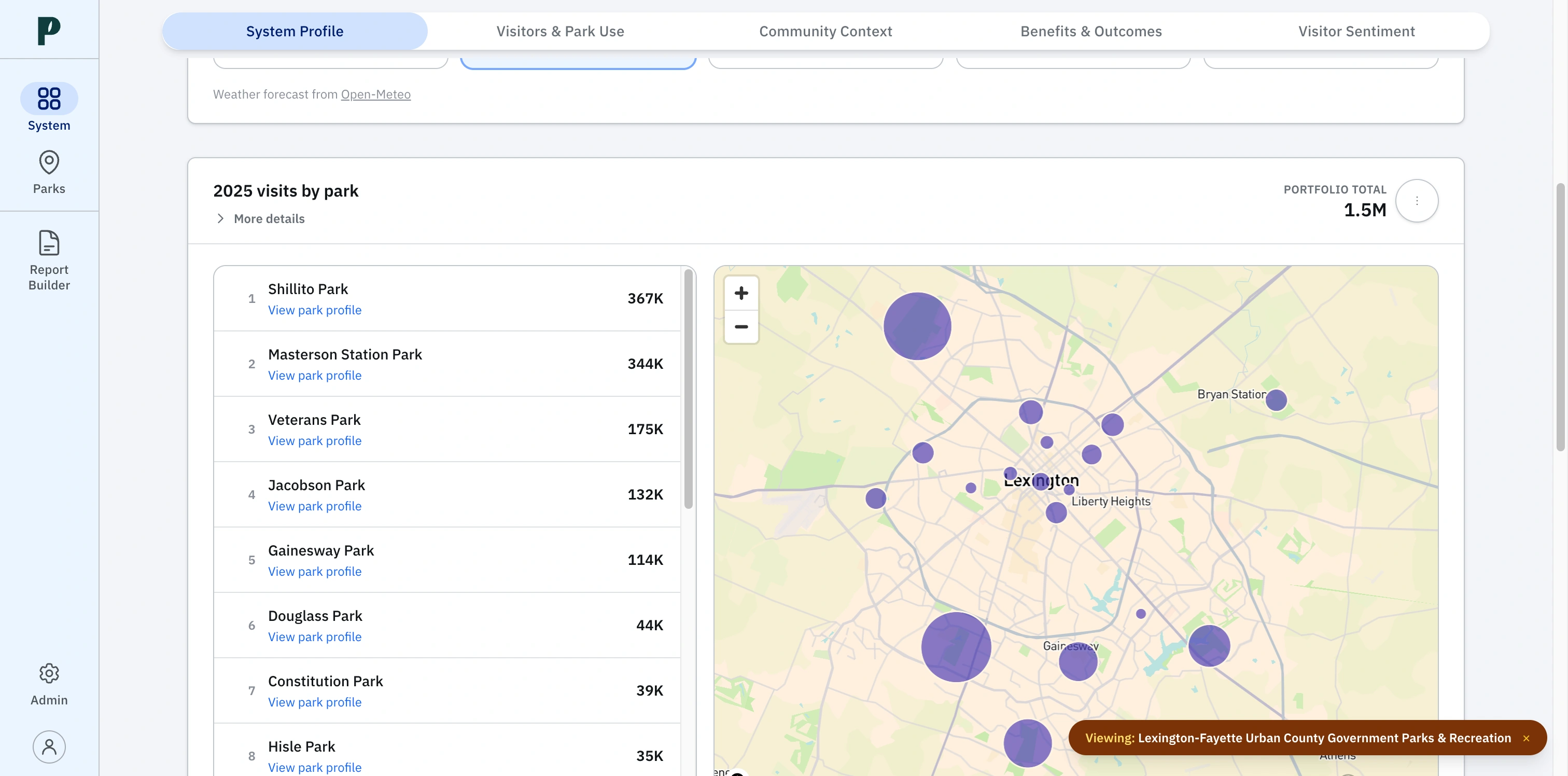
Compare estimated visitation across your system and examine individual parks and facilities. Understand where use is concentrated and how often visitors return to inform management and planning.
When people visit and how long they stay
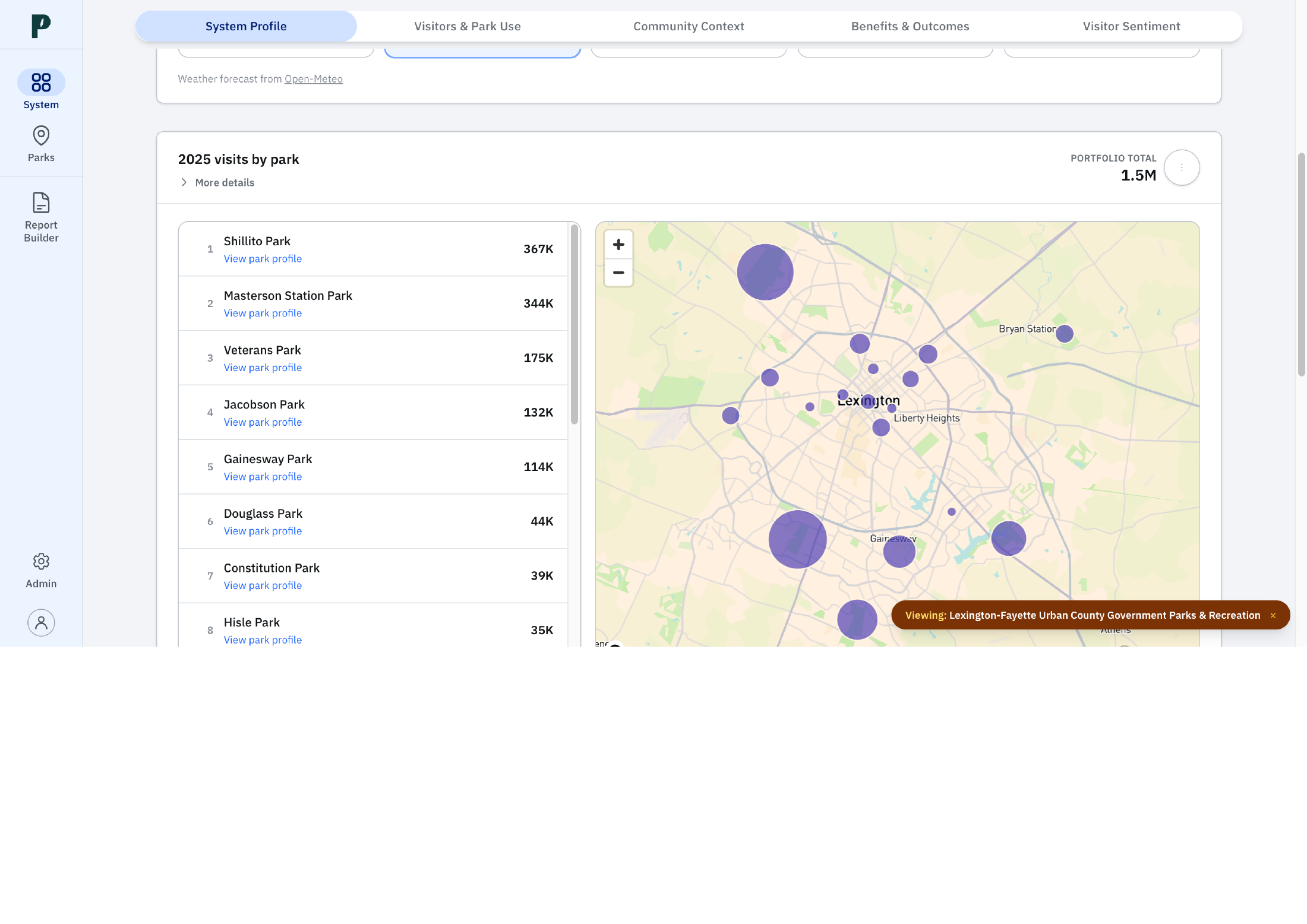
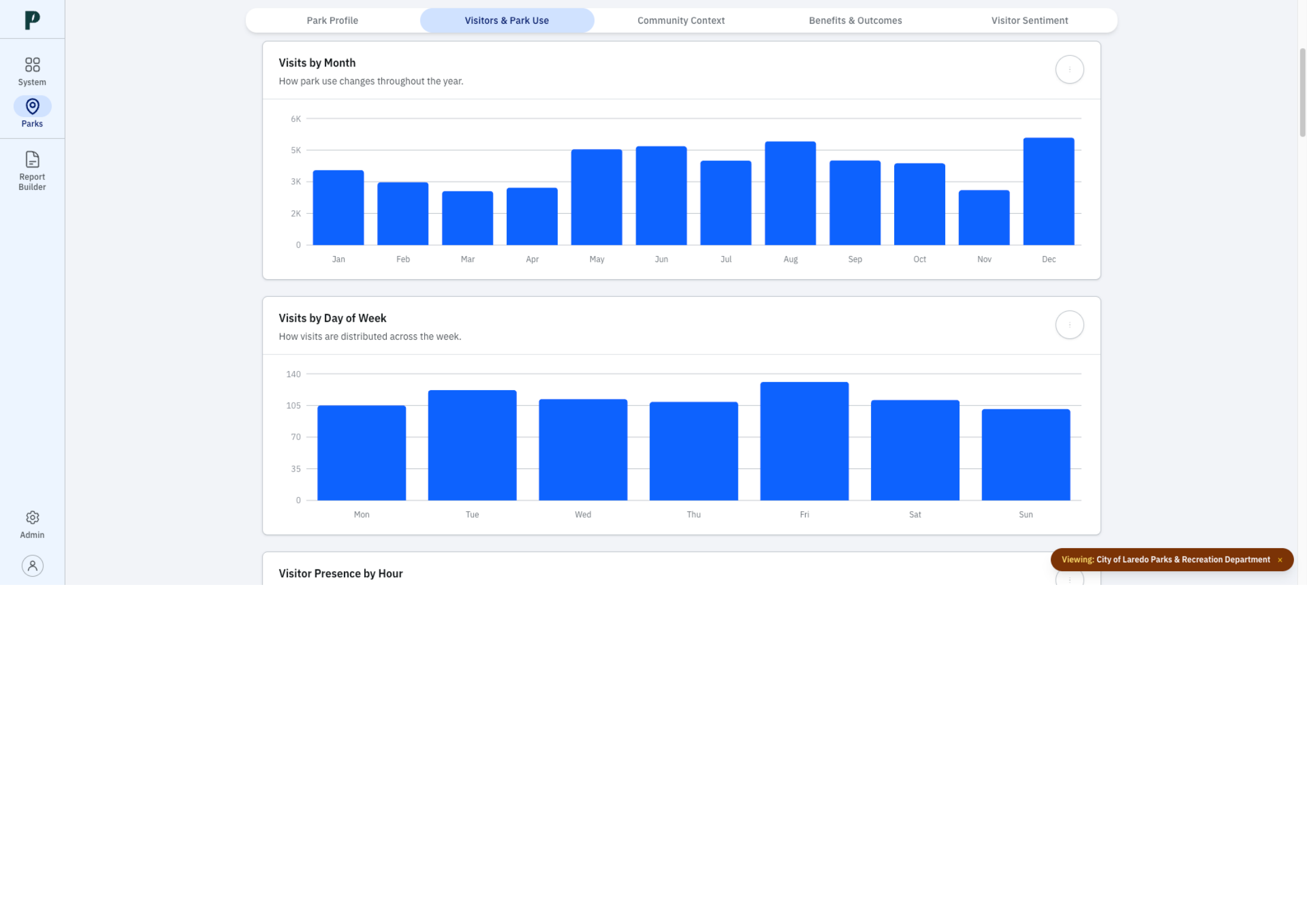
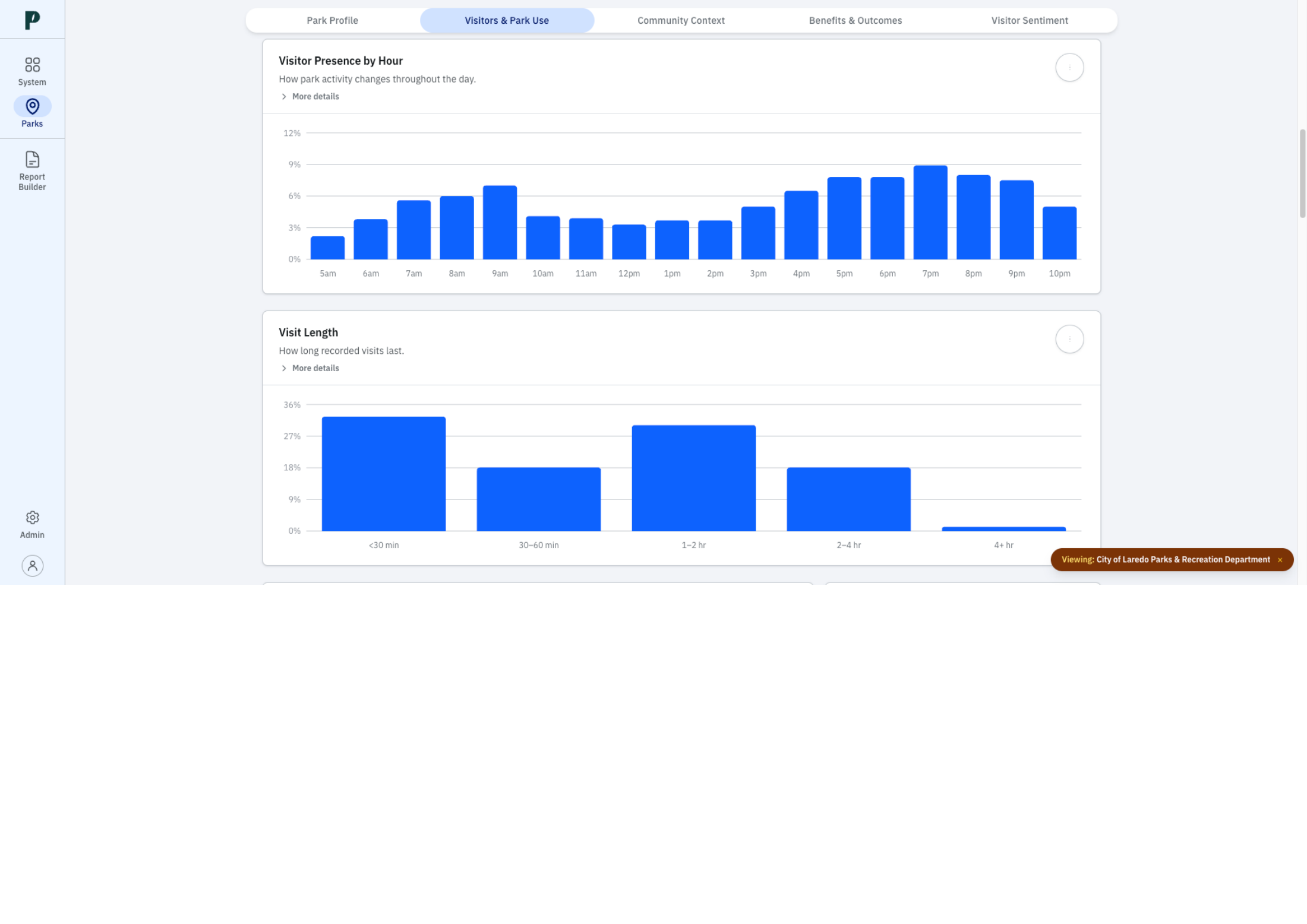
Understand when people visit, how long they stay, and how use changes through the week and year. Use these findings to inform operating hours, staffing, and programming.
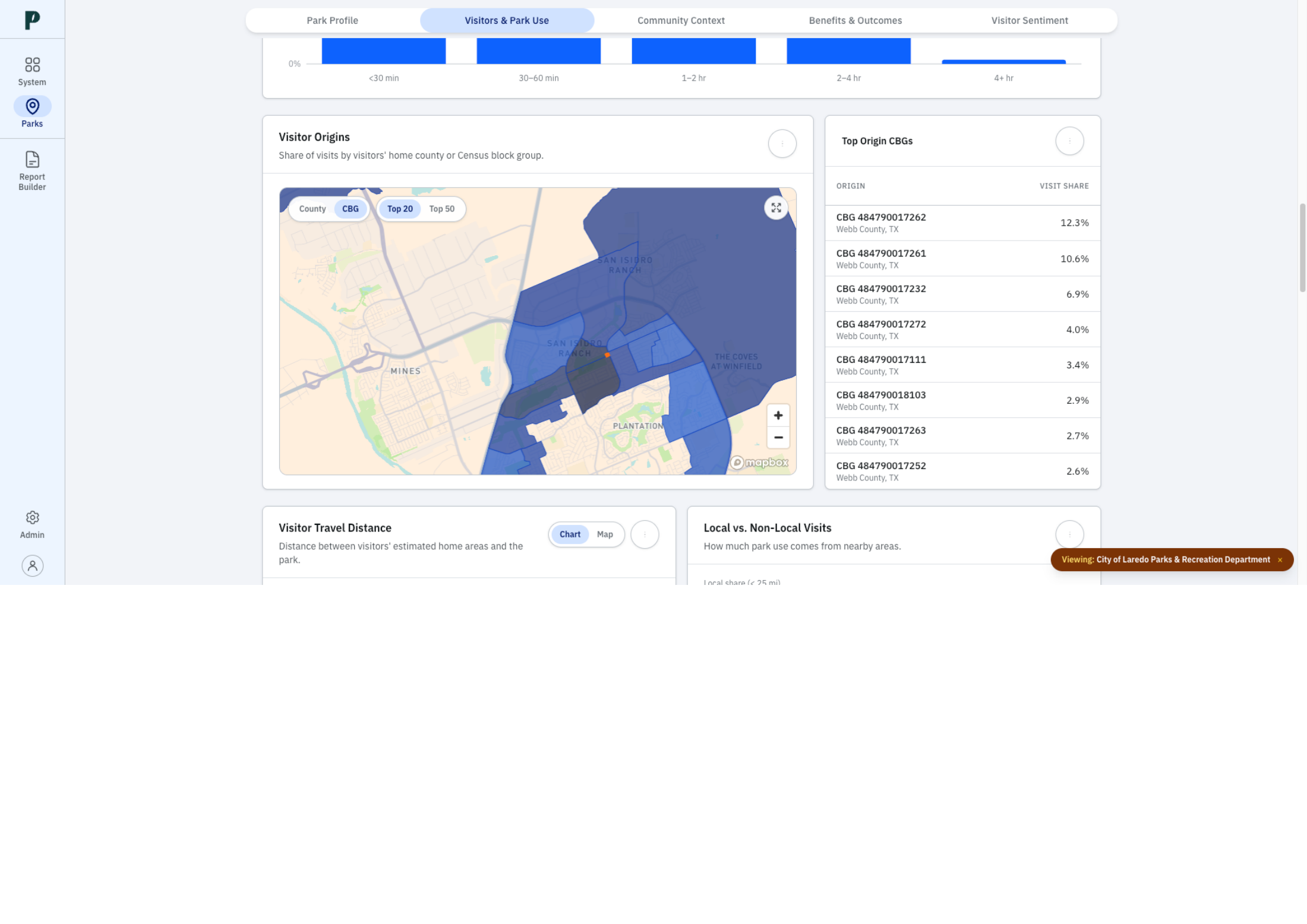
Where your visitors come from
Understand where visitors come from, how far they travel, and how local and nonlocal use compare. Review the characteristics of visitors’ home areas to inform outreach.
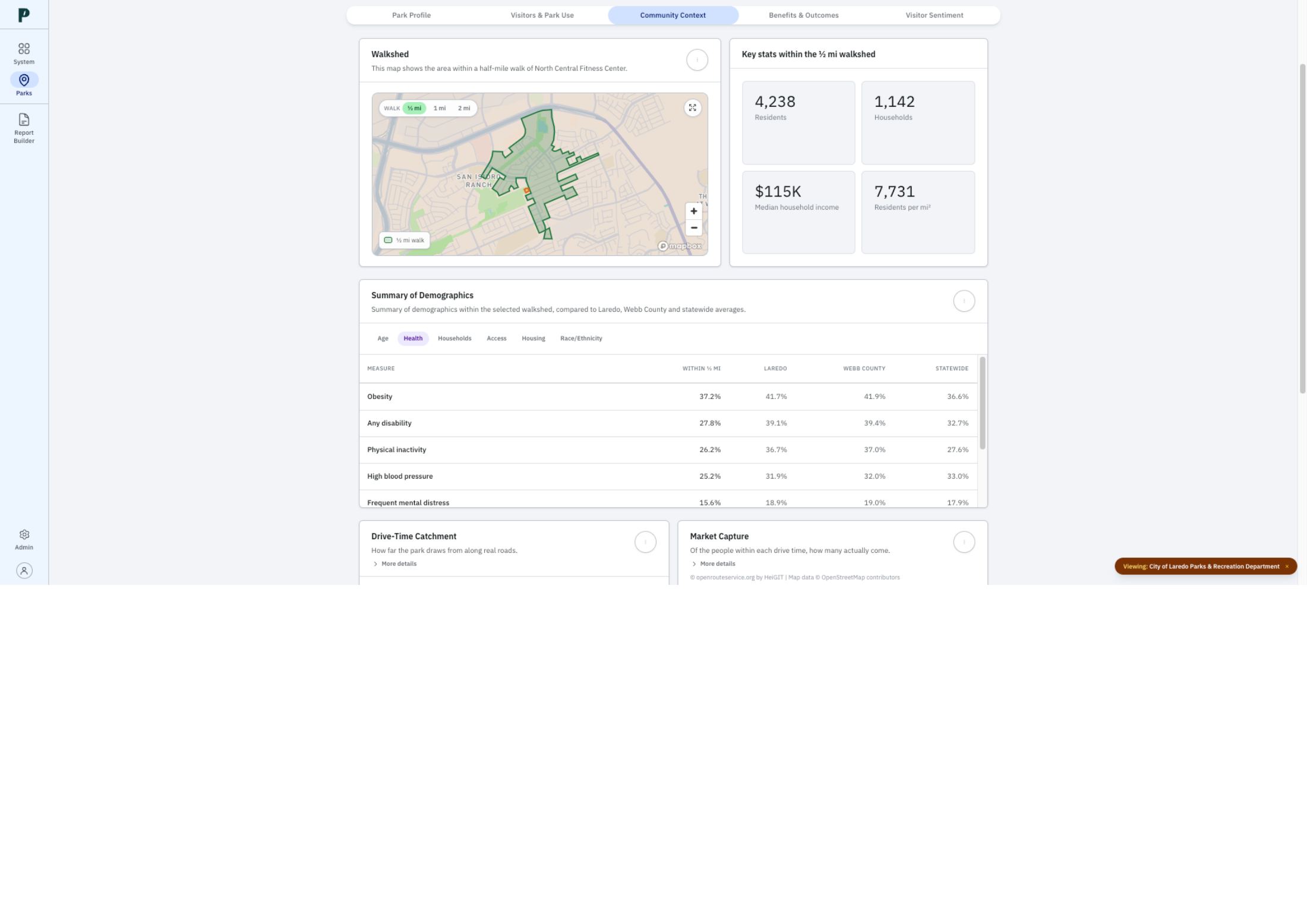
The communities around your parks
Study the communities within walking or driving distance of each park, including population, household characteristics, health, and access. Compare these areas with local and regional benchmarks, and consider the findings alongside visitor origins to inform services and outreach.
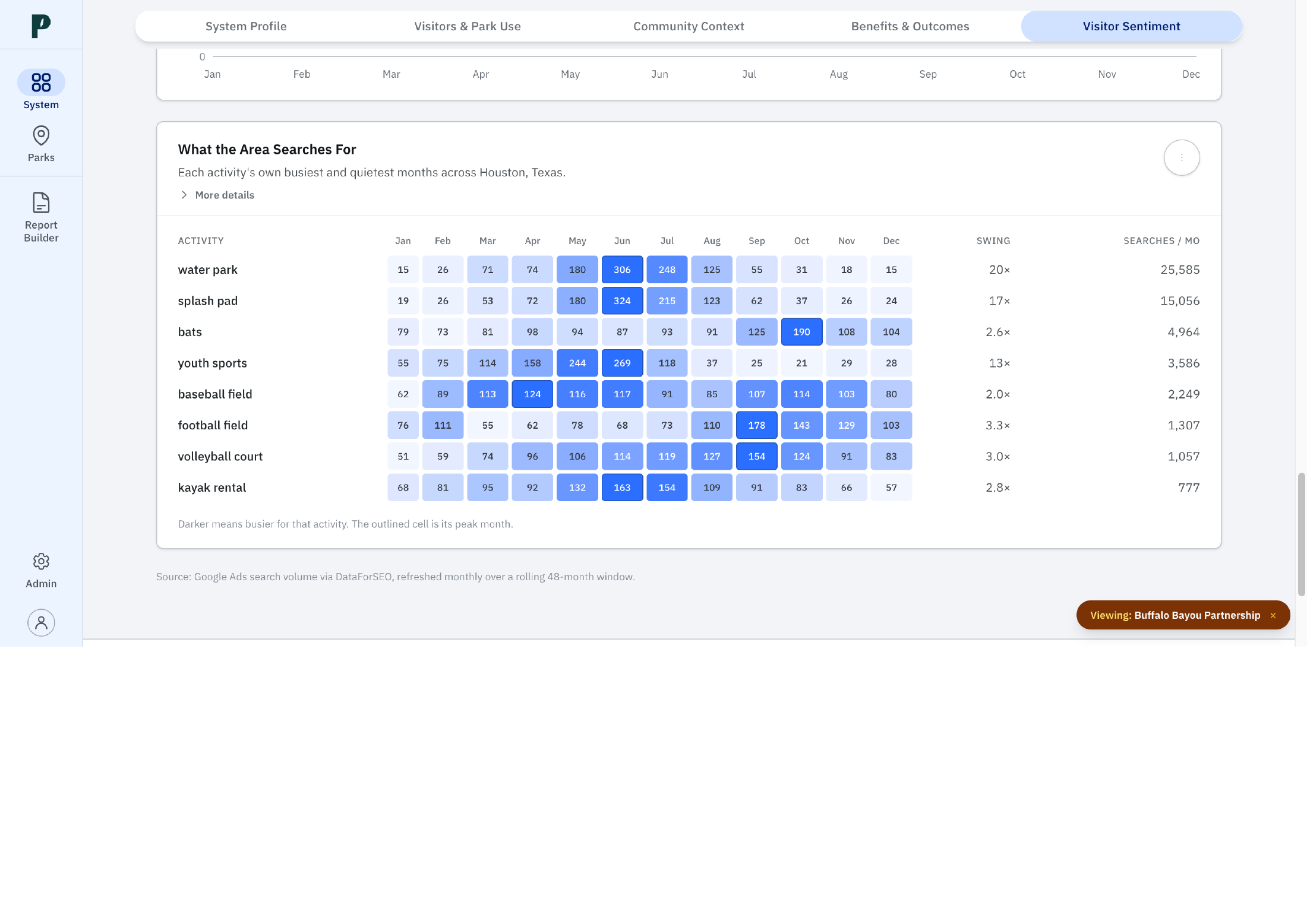
What recreation people are looking for
Study online search patterns to understand interest in recreation activities and how it changes through the year. Use the findings to inform programming and outreach.
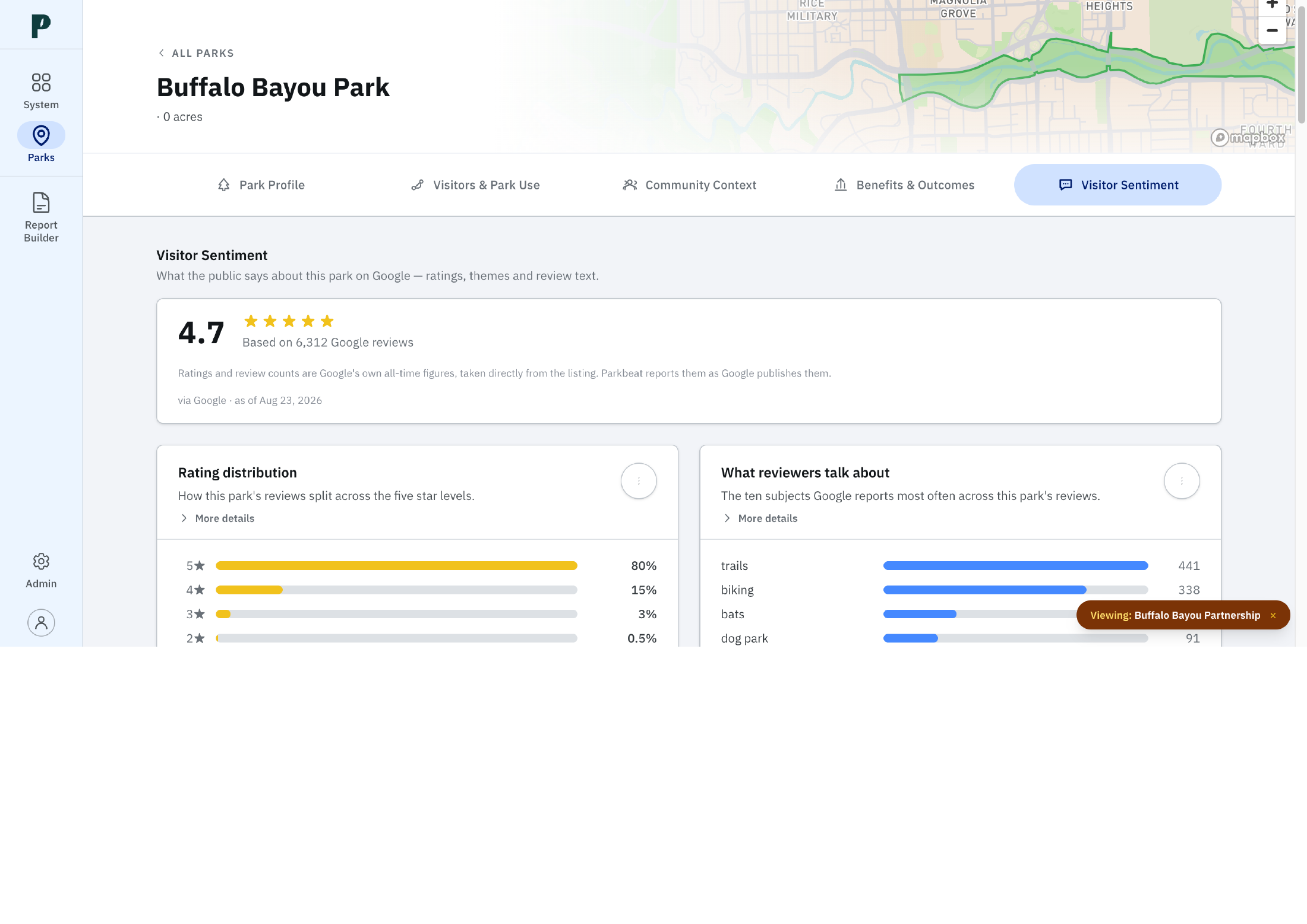
What people say about their experience
Understand what people appreciate about your parks and where they report problems. Review recurring themes in public ratings and comments to inform service improvements.
Economic contributions and public benefits
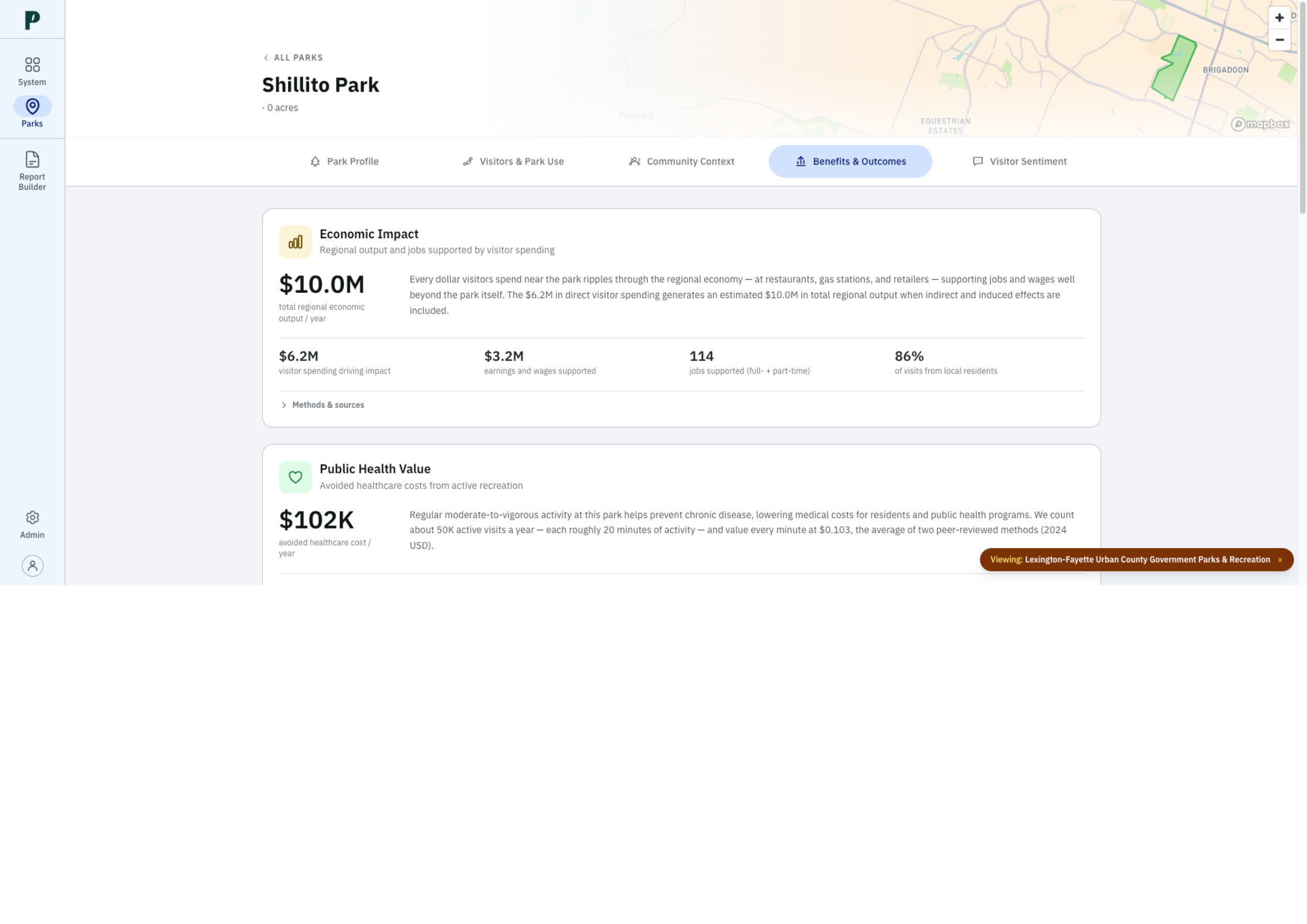
Use economic analysis to assess park benefits and communicate their value in budget and funding discussions.
Economic contributions
Estimate how visitor spending, park operations, and capital investment contribute to jobs, income, and tax revenue.
Recreation and public benefits
Assess the value people receive from recreation beyond what they spend, along with benefits to public health, property values, and the environment.
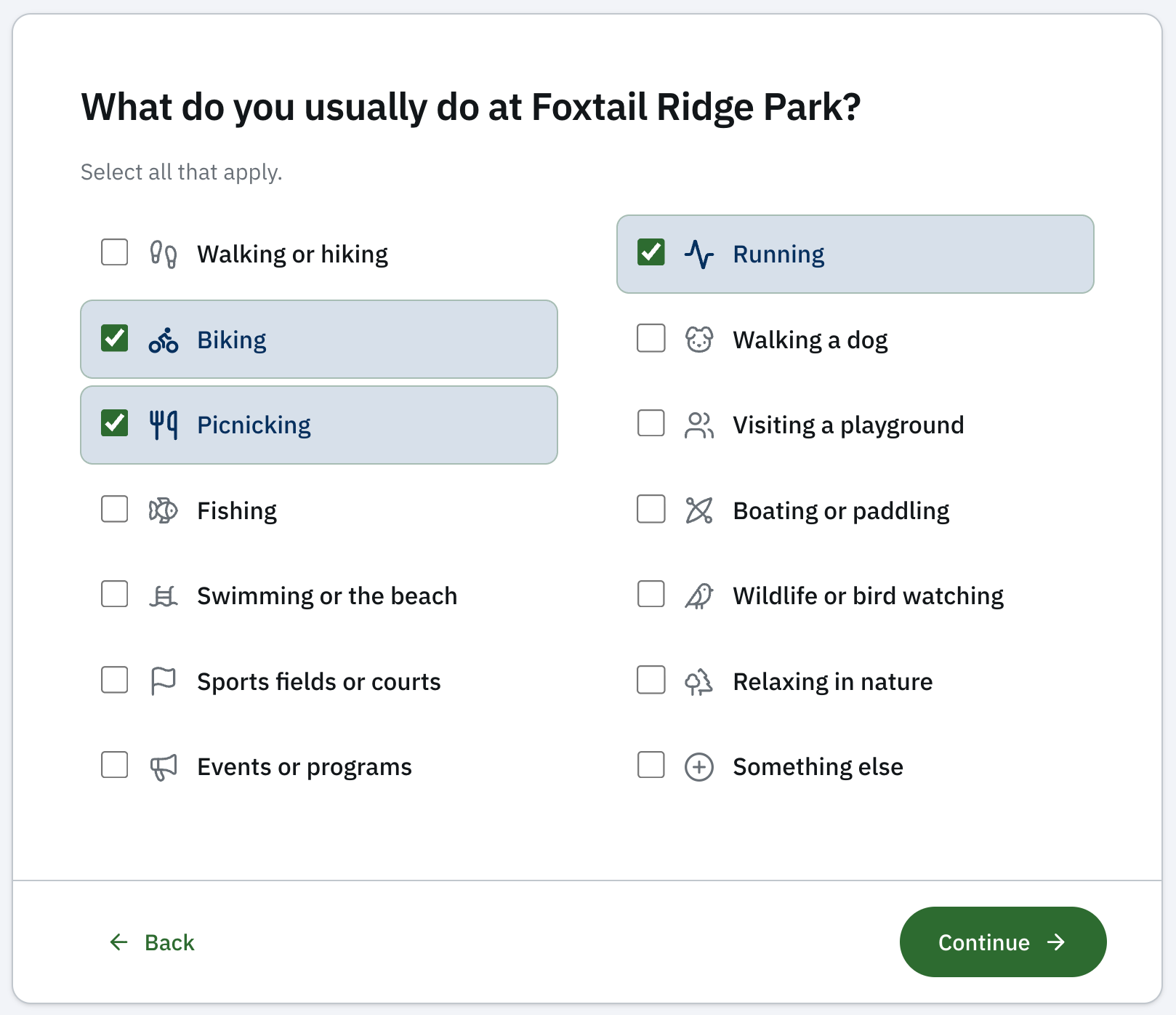
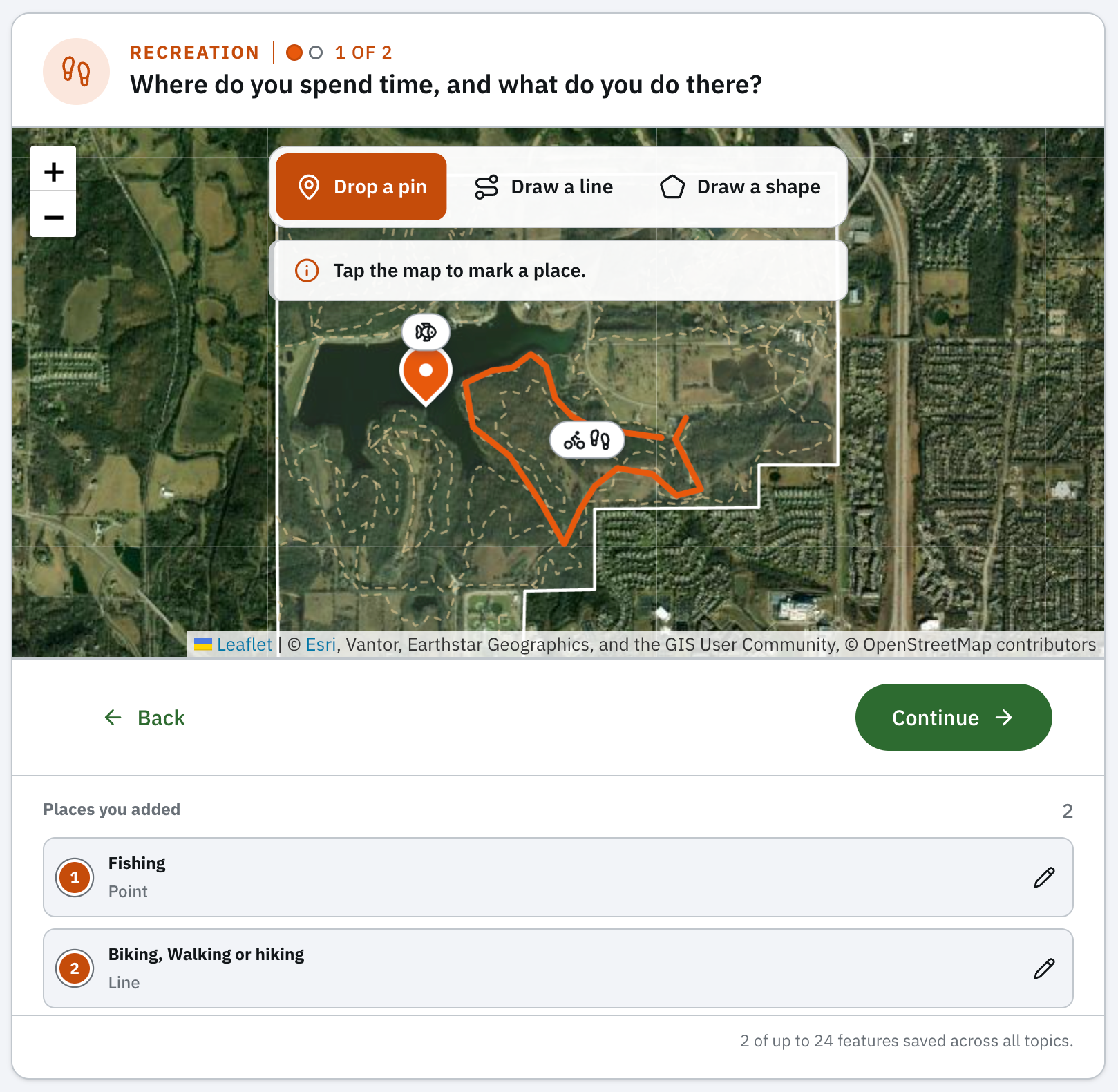
What visitors and residents value
Use Parkbeat Surveys to ask visitors and residents about activities, experiences, barriers, and priorities. Include people who do not currently visit, and review mapped responses alongside visitation and community data.
Park data and documents
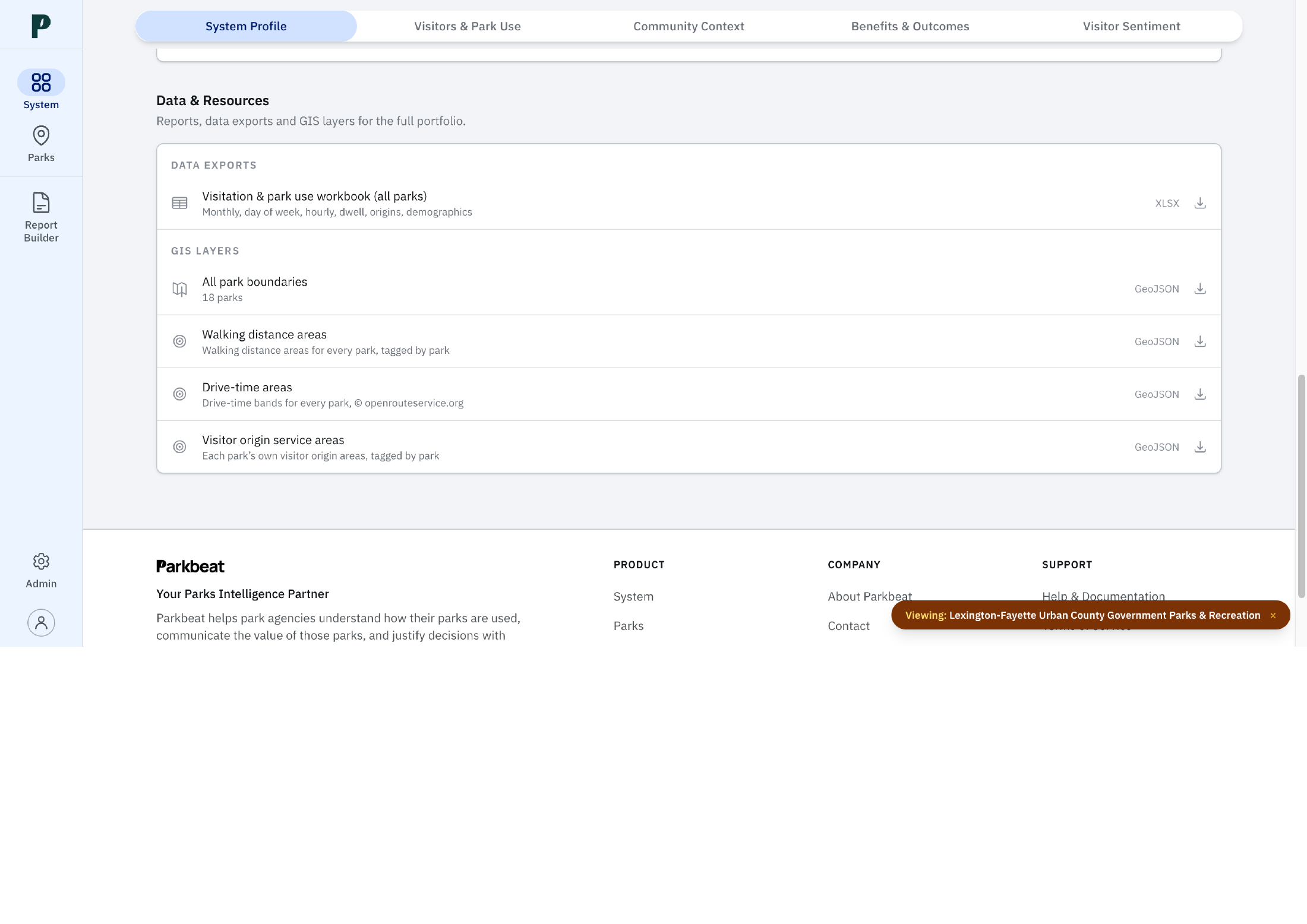
We keep all of the tabular and spatial data, reports, and shared planning documents together in one place so that staff and project partners can access these resources whenever they need.
Reports and data you can use
Access Parkbeat Reports for an individual park or your entire system. Export reports, maps, charts, and tables for planning, operations, budget and funding requests, and public discussions. Download workbooks and GIS layers for your own analysis.
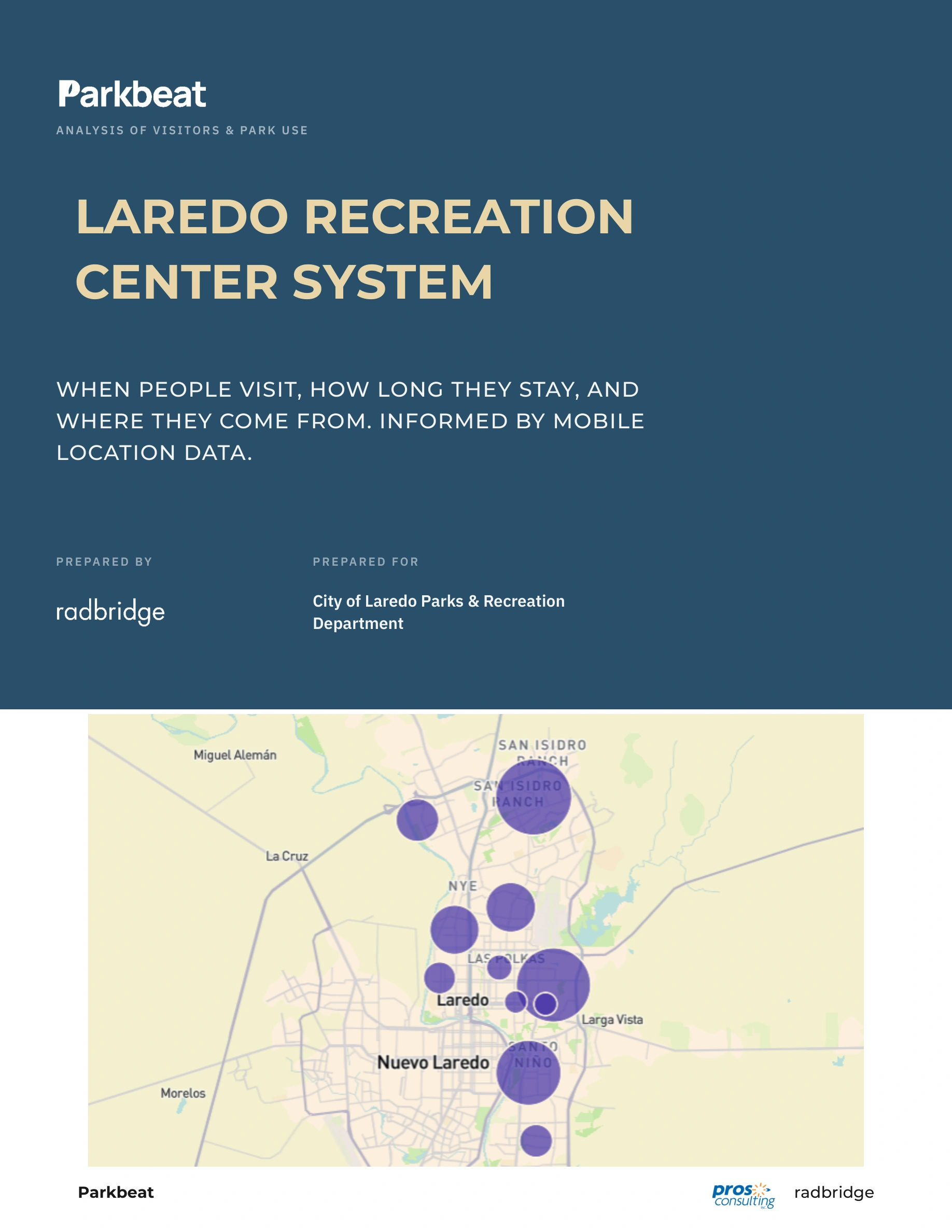
LaredoSystem report · Cover
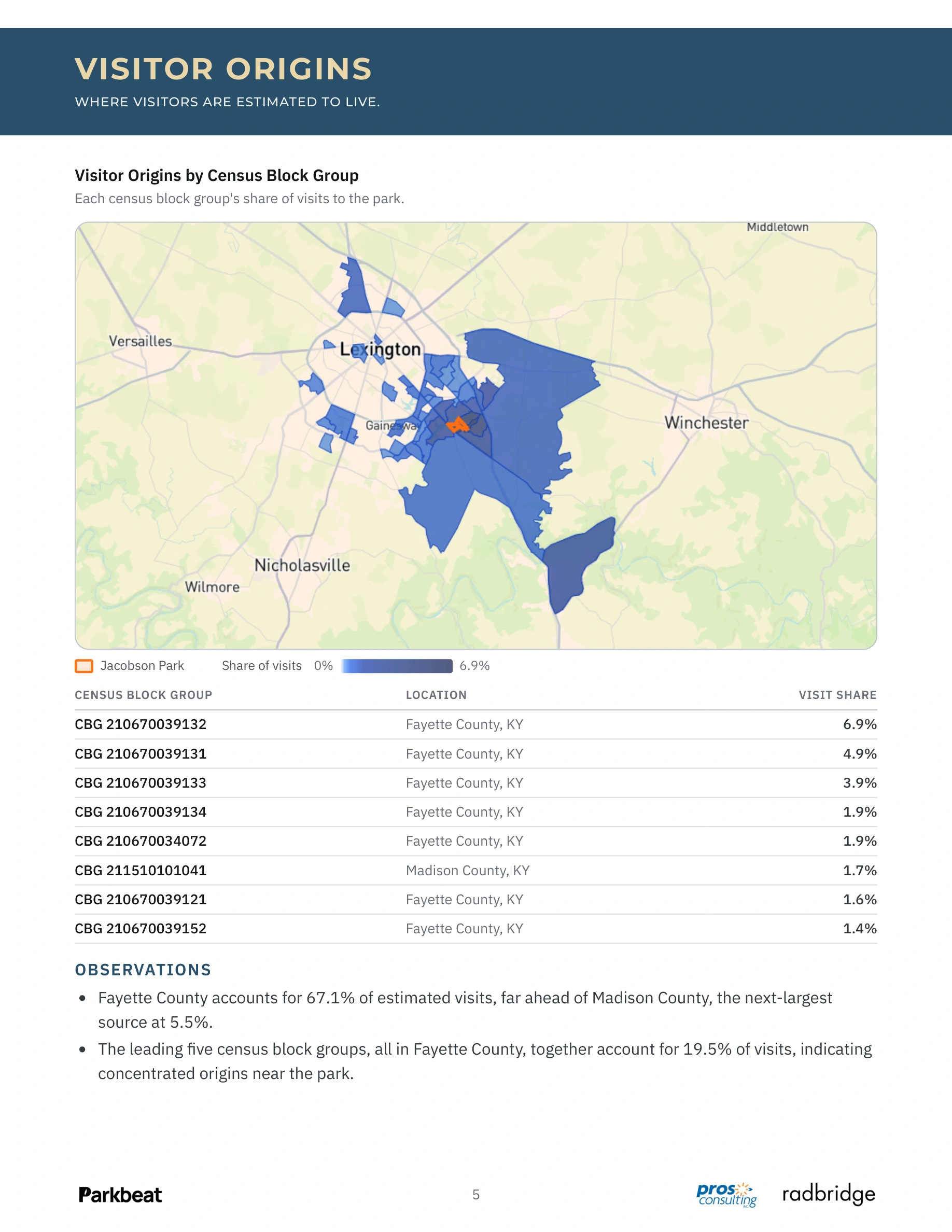
Jacobson ParkVisitor origins · Page 5
Agencies and partners we’ve worked with
- Buffalo Bayou Partnership
- Iowa Department of Natural Resources
- PROS Consulting
- City of Laredo
- Lexington Parks & Recreation
- Santa Clara Valley Open Space Authority



Discuss your project
Tell us about your parks and what you need to understand. We’ll help you understand what data is available, discuss potential surveys, and develop analyses that fit your project. Parkbeat can be accessed via a one-time report or through ongoing dashboard access.
Talk with the Parkbeat team Our parks and recreation work